



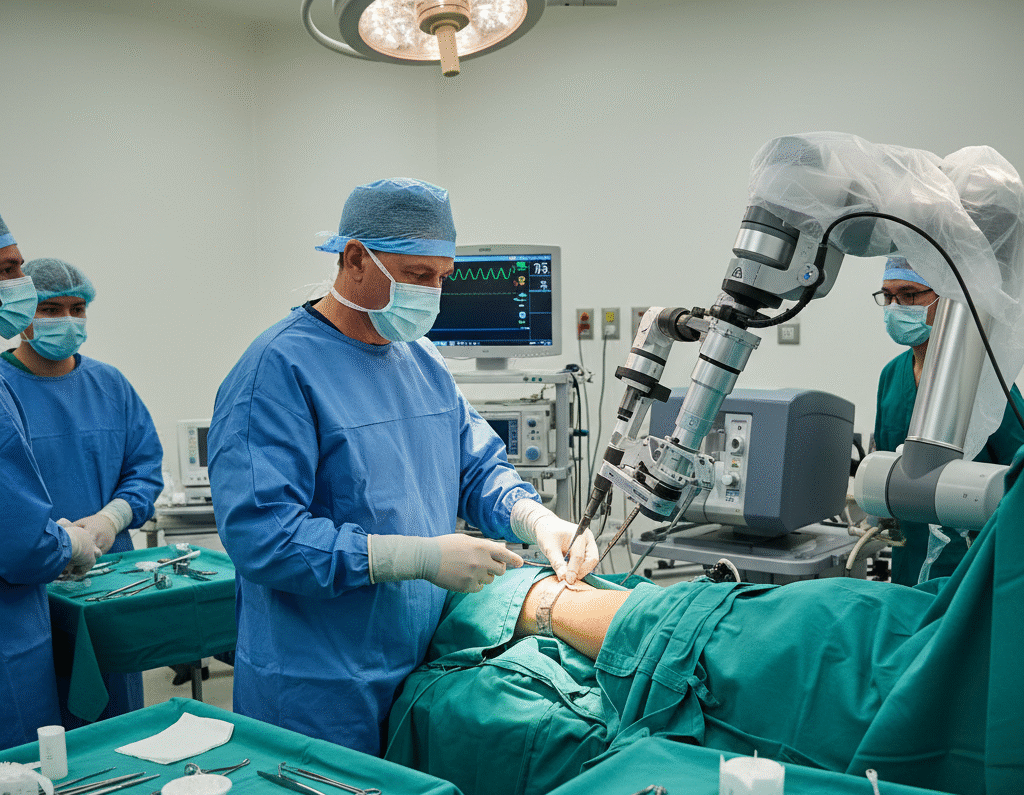
Robotic knee replacement surgery is a technique where advanced computer-guided technology assists the surgeon in planning and positioning the knee implant with greater precision.
At Tejasya Hospital, the procedure is performed by the surgeon using Robo CR+ technology, which supports accuracy while keeping full surgical control with the doctor.
Why Knee Replacement Needs Precision
The knee is a complex, weight-bearing joint. Small variations in implant positioning can influence how the joint moves, how forces are distributed, and how comfortable daily activities feel after surgery.
Traditional knee replacement techniques rely on manual instruments and visual assessment. While effective in many patients, certain knee anatomies or deformities may benefit from technology-assisted planning, where precision support helps the surgeon execute the plan more accurately.
What “Robotic” Means in Knee Replacement (Simple Explanation)
Role of technology
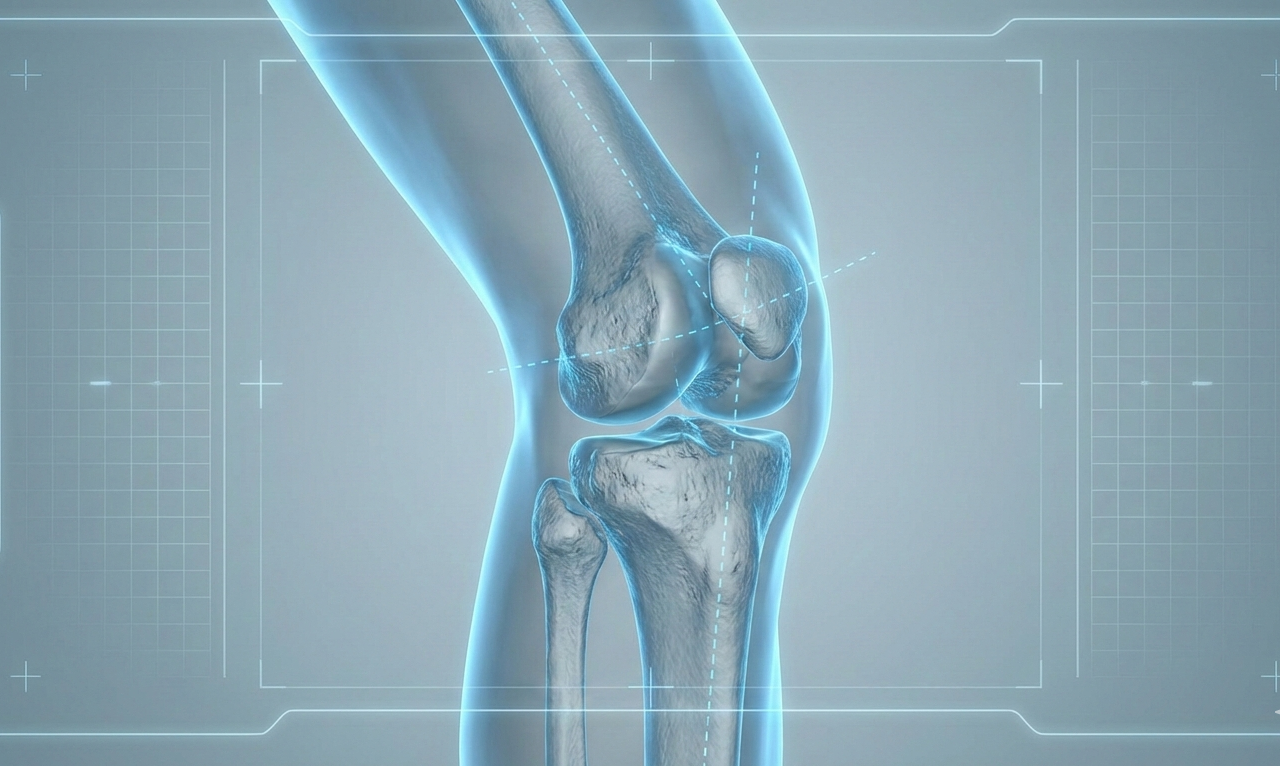
Robotic systems like Robo CR+ use CT-scan–based planning to create a detailed three-dimensional understanding of the patient’s knee before surgery.
Role of the surgeon
The surgeon:
- Plans the procedure
- Performs all bone preparation
- Places the implant
- Makes every clinical decision
What the robot does not do
The robotic system does not operate on its own. It only assists by providing guidance and real-time feedback during surgery.
How Robotic Knee Replacement Surgery Works
Pre-Surgery Planning
A CT scan is used to study:
- Bone structure
- Joint alignment
- Implant positioning options
This allows personalized planning rather than a standard, one-size approach.
During the Surgery
The robotic system helps the surgeon follow the planned alignment while allowing adjustments based on real-time knee movement and soft-tissue balance.
Surgeon Control & Adjustments
If needed, the surgeon can modify the plan during surgery to ensure stability and proper movement.
Robotic Knee Replacement vs Traditional Knee Replacement
Aspect | Robotic-Assisted | Traditional |
Surgical planning | Patient-specific (CT-based) | Standardized |
Implant positioning | Technology-guided | Manual |
Surgeon control | Full control | Full control |
Suitability | Select cases | Select cases |
Important: Robotic assistance is one of several tools, not a replacement for surgical expertise. In some patients, traditional methods may be equally appropriate.
Who Can Benefit From Robotic Knee Replacement
Robotic assistance may be considered in patients who:
- Have advanced knee arthritis
- Have alignment irregularities
- Require precise implant positioning
Final suitability is determined after clinical evaluation, imaging, and surgeon judgment.
Who May Not Need Robotic Knee Surgery
- Patients with early-stage arthritis
- Cases where anatomy is straightforward
- Situations where conventional techniques already provide reliable outcomes
Technology supports decision-making — it does not dictate it.
Recovery After Robotic Knee Replacement Surgery
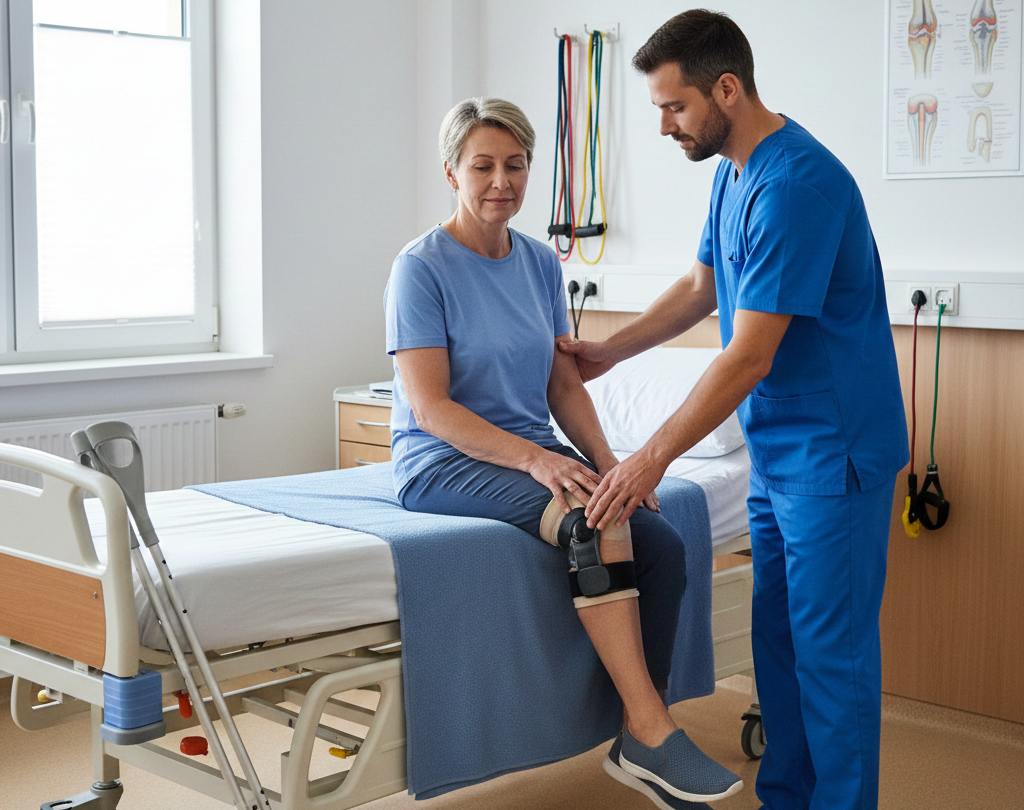
Recovery varies from patient to patient and depends on:
- Overall health
- Muscle strength
- Pain tolerance
- Physiotherapy participation
General recovery milestones (non-guaranteed)
- Assisted movement begins when medically appropriate
- Gradual improvement in walking and knee bending
- Ongoing rehabilitation plays a key role in long-term results
No fixed timeline applies to every patient.
Is Robotic Knee Replacement Surgery Safe?
Robotic knee replacement follows the same surgical safety principles as conventional knee replacement.
The robotic system functions as an assistive tool, while surgical safety depends on:
- Proper patient selection
- Surgical planning
- Surgeon experience
- Post-operative care
Risks & Possible Complications (Balanced Overview)
As with any knee replacement surgery, possible risks may include:
- Infection
- Blood clots
- Stiffness
- Implant-related issues over time
These risks are discussed individually during consultation and managed through standard surgical protocols.
Long-Term Outcomes: What Patients Should Know
Long-term success depends on:
- Correct implant placement
- Rehabilitation consistency
- Activity modification when advised
Robotic assistance aims to support precision, but long-term outcomes rely on multiple medical and lifestyle factors.
Common Myths About Robotic Knee Replacement
“The robot performs the surgery” — No. The surgeon performs the surgery.
“Recovery is immediate” — No. Recovery is gradual and patient-dependent.
“Robotic surgery is required for everyone” — No. It is used selectively.
How to Decide If Robotic Knee Replacement Is Right for You
Patients should discuss:
- Their knee condition
- Imaging findings
- Treatment options
- Expected recovery process
A personalized consultation is essential before choosing any surgical approach.
Robotic knee replacement using Robo CR+ is designed to support surgical precision, but successful outcomes depend on thoughtful evaluation, surgical expertise, and rehabilitation commitment. Technology assists the process — care and recovery complete it.